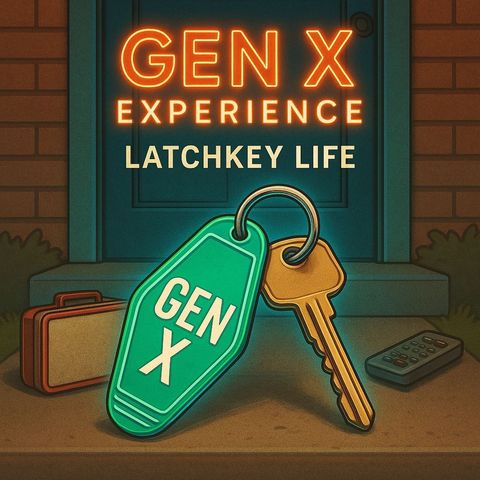
Millions of Generation X children came home to an empty house every afternoon. Was latchkey life neglect—or did it help create one of the most independent and resilient generations in American history?
🕒 12:01 • 🏡 Childhood • 🔑 Latchkey Kids • 🚲 Independence • 🎧 Free Podcast
▶ Listen NowRemember walking home from school with a house key hanging around your neck—or hidden somewhere only your family knew?
Long before smartphones, location tracking, and constant text messages, millions of Generation X kids unlocked the front door, fixed an afternoon snack, watched television, finished their homework, and waited for their parents to return from work.
For some, those unsupervised hours brought freedom, confidence, and responsibility. For others, they brought loneliness, uncertainty, and pressure to grow up too quickly. The latchkey experience became one of the defining realities of childhood during the 1970s and 1980s.
In this episode of Gen X Experience, Eric Thompson examines the changing families, economic pressures, and cultural shifts that produced the latchkey generation—and asks whether the independence we gained was worth the price some children paid.
🎙 Episode Facts
| Episode | #1 |
| Runtime | 12 minutes, 1 second |
| Released | August 29, 2025 |
| Host | Eric Thompson |
| Series | Gen X Experience |
| Category | Podcast |
| Topics | Latchkey Kids • Childhood • Independence • Family Life • 1970s • 1980s |
🎧 Listen to the Episode
“We weren’t supervised every minute. We learned to solve problems, accept responsibility, and find our own way home.”
📌 In This Episode You’ll Learn
- Why so many Gen X children came home to empty houses
- How dual-income families and changing family structures reshaped childhood
- Where the term “latchkey kid” came from and what it represented
- How independence, loneliness, responsibility, and freedom often existed together
- Why many Gen X adults connect latchkey life with resilience and self-reliance
- Whether this childhood experience should be remembered as freedom, neglect, or both